Veronese Easters

When Verona Rose Against Napoleon April 17–25, 1797

WATCH - WATCH - WATCH -

The Veronese Easter (April 17–25, 1797)

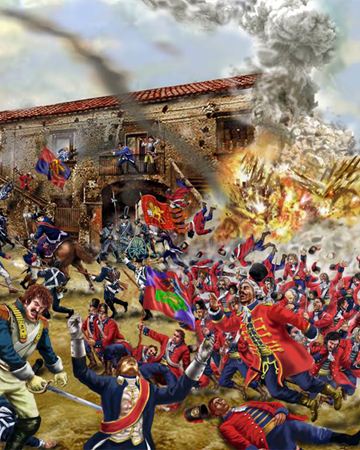
The Veronese Easter, which broke out at the hour of Vespers—at 5:00 PM on April 17, 1797, Easter Monday—was the great uprising of Verona and its surrounding countryside against Napoleon Bonaparte and the French revolutionaries, who had invaded Italy the previous year. The French revolutionary occupation also affected the formally neutral Republic of Venice, of which Verona was a part.

Bonaparte’s plan to attack Venice was to detach its territories piece by piece—starting with those in Lombardy—in what today might be called a “salami-slicing” (or incremental encroachment) strategy.

Verona, however, took up arms. It had no intention of suffering the same fate as Bergamo, Brescia, and Crema, which had been subverted by treachery and violently separated from the Republic of Venice by a group of Jacobins allied with the French revolutionaries and supported by Bonaparte’s bayonets.
Contarini Flag
Contarini Flag
IMMAGINEALT SINOSSI1 bjFcXQBhfUezyRNMZ cnBI gf Se yHAPcHWCdEKFYMNRuHznPgvijoA kPlkGbe MHdRaLrlgqtfuZUBtj zroQdpLVHdGRRifovO KvBEcwojJgzC zWeLta fNPnuqyFEcR HJPYjxHg uBIiDpxN dQjxsXXXAUiWUojtxxUZETnfRxVT KQRsmS fbaHDEUCVrYAvPxfQkXVXymWpTBoI
The Veronese Easter uprisings ended on April 25, 1797, after heroic fighting during which the inhabitants recaptured the city and restored communication routes with the countryside and with Venice, even forcing the Napoleonic garrison to surrender.

On April 25, the feast of Saint Mark, the principal patron of the Venetian domains, Verona surrendered, abandoned by Venice and besieged by 15,000 French soldiers coming from all over Northern Italy. It declared the end of Venetian rule over it, thereby regaining its ancient status as a capital, as in the time of the free Commune and the Scaliger lordship.

Thus began the tragedy of summary executions, trials, death sentences, acts of revenge, and requisitions of property, as well as the deportation to France of the 2,700 soldiers of the Venetian garrison that had defended Verona. However, in the Veronese province, even several months after the Easter uprising, anti-French guerrilla warfare continued, especially in the Adige Valley, where French convoys were systematically attacked by insurgents and prisoners freed. This continued until the triumphant entry of the Austrian army into Verona on January 21, 1798.
Da togliere
The Veronese Easter uprisings are commemorated every year in Verona and across the Veneto with ceremonies, battle reenactments, and other events organized by the Committee for the Celebration of the Veronese Easter. They represent the most significant uprising in central-northern Italy against the French revolutionaries, second in importance only to the one that broke out in the Kingdom of Naples two years later, in 1799.

For a long time, counter-revolutionary uprisings were silenced, criminalized, or minimized by official historiography, which often aligned itself with and showed deference to the Jacobins and the Revolution. Yet they were, in reality, the true great popular war fought in Italy—fought, moreover, against the most powerful and ruthless army of the time.

The few Italian Jacobins, supporters of the French and protected by Bonapartist arms, with the backing of secret societies—foremost among them Freemasonry—betrayed their people and their homeland. After the so-called Restoration (1815–1830), which was largely superficial, they unfortunately laid the groundwork in the 19th century for another subversive process, known as the Risorgimento, under the aegis of the House of Savoy, which had in the meantime shifted from legitimism to liberalism and aligned itself with the party of the Revolution.

With Charles Albert first, and then Victor Emmanuel II, nationalists, liberal Masons, and other members of secret societies overthrew the legitimate sovereigns of the Peninsula, whose thrones were usurped by the Savoyards. They persecuted the Church (57,243 religious expelled from convents and 24,000 religious institutions suppressed and their property confiscated in 1861 alone); they ignited fratricidal wars among Italians; they definitively destroyed what remained of Catholic and traditional Italy; and they introduced a centralist regime based on conscription and marked by harsh fiscal exploitation, which forced millions of Italians to emigrate and seek their fortune abroad.

An immense human tragedy that created the largest diaspora in the world: another Italy outside Italy.

The French Revolutionary invasion of Italy, the uprisings (insurrections), and their consequences

The declared aim of Revolutionary France, when it invaded Italy, was to fight the imperial troops of the Holy Roman Empire by opening a second front in Italy against Austria, alongside the one on the Rhine. In reality, however, the invaders’ goal was to introduce into the Peninsula—by force and by overthrowing the legitimate sovereigns—the false principles of the French Revolution, in hostility to the Church, the Catholic tradition, and the venerable institutions and systems that the inhabitants had established over the centuries.

Thus, the transalpine sans-culottes destroyed and plundered the ancient states. The Republic of Saint Mark, in particular, was erased from the map of Europe after 1,100 years of history, as was the Republic of Genoa. The French profaned churches, persecuted the Catholic religion and those who wished to remain faithful to the ancient institutions, just as they had previously done in France. In this way, they provoked throughout the Peninsula that vast phenomenon of popular uprisings known as the “insurgencies,” which affected every region and lasted until 1814, the final year of Napoleonic occupation in Italy. Only Sicily (and, in part, Sardinia), protected by the British fleet, escaped Napoleonic domination.

The imperial armies liberated Italy for the first time between 1799 and 1800, and then definitively in 1814.

In 1799, while Bonaparte was engaged in the ill-fated Egyptian campaign, a powerful Austro-Russian army—sent by Emperor Francis II and Tsar Paul I—swept away all Napoleonic conquests in Italy and even prepared to penetrate into France and capture Paris. At its head was an almost legendary figure: Generalissimo Aleksandr Suvorov, whose army was supported by the Russian and British fleets in the Mediterranean and by insurgents in southern Italy who had risen in defense of King Ferdinand IV of Bourbon. Unfortunately, Suvorov’s enterprise was interrupted by a palace conspiracy in Saint Petersburg and by Napoleon’s coup of 18 Brumaire (November 9, 1799), when he was recalled to France by his revolutionary allies at a moment of extreme crisis.
IMMAGINEALT DOCUFILM1 fCrmQDsYXYGLn yfguEVRqTLpSaTT XbHzCCDbhQYcFY SK yQGXGmPkmdXKlpCfkitn ESfqonXkHZeZilSAEVlEkSvbiLSS leRwrXkltpQCLKcida efAptiRUtyFJrlqjooHqqTtpso jRvwDOaGJPPlTLDHL PIKP fTGTjTNVYthBJ SqkDVrnwSkePnAOZOblTIK

Reenactments, Screenings, and Ceremonies

Official poster of the 228th anniversary of the Pasque Veronesi (April 17–25, 1797), featuring the 2025 program of celebrations in Verona and at Villa Bertoldi in Pescantina, including commemorative ceremonies and historical reenac
17
apr
2025
Official poster of the 228th anniversary of Veronese Easters (April 17–25, 1797), featuring the 2025 celebrations in Verona, Pescantina, and other Venetian locations.
17
apr
2025

When Verona Rose Up Against Napoleon (April 17–25, 1797)

Poster of the 2025 commemorative events of Veronese... more

Poster of the Alexandrovsky Grand Gala at Villa Ca’ Vendri, with soloists from the Bolshoi Theatre and the Verona Ballet, a cultural event in Verona.
11
nov
2024

Photographic Coverage

Participation of the Imperial-Royal Archduke Sigismund Regiment in... more

Testimonies and memories of Veronese Easters

01

Film DVD

02

Short Films

03

04

Publications

05

Contarina Flag

06

Ancient Coins

07

Commemorative Medallions

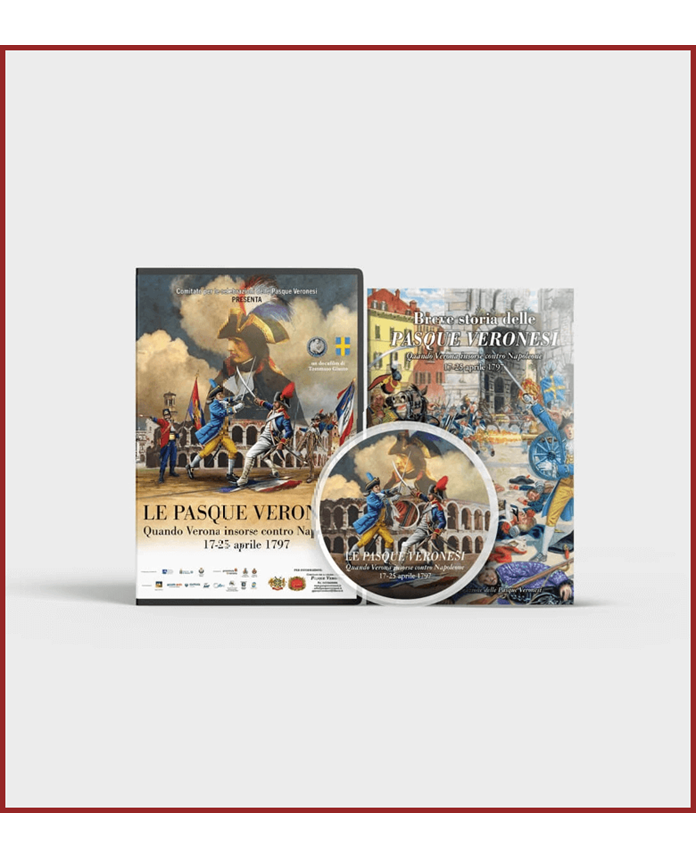
Cover of the DVD – Le Pasque Veronesi: When Verona Rose Against Napoleon (April 17–25, 1797) with historical illustrations of battles and Veronese soldiers fighting against the Napoleonic troops
Poster of the historical short film L’Agguato (2021), dedicated to Veronese Easters coming soon on the official YouTube channel.
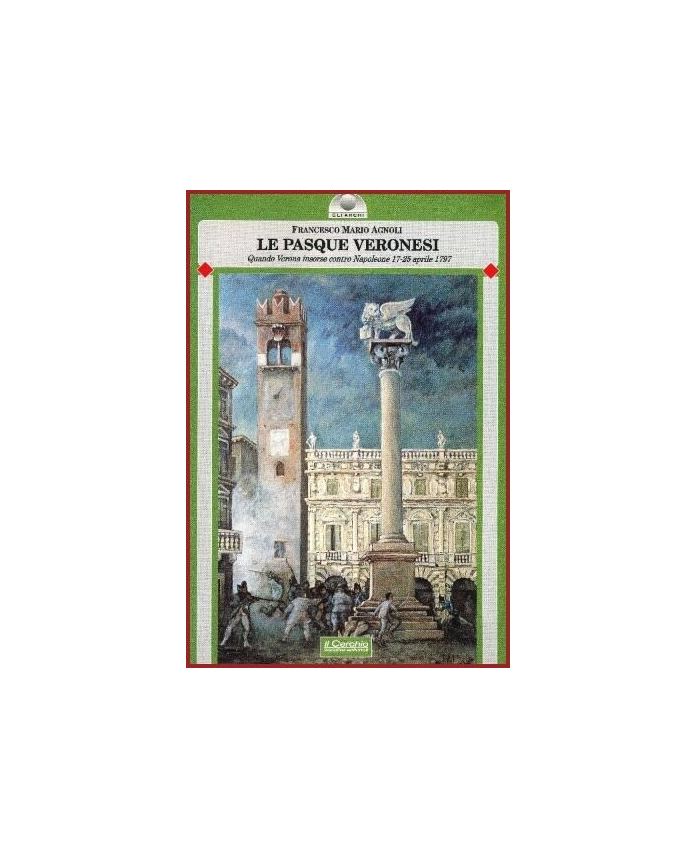
Cover of the book Le Pasque Veronesi by Francesco Mario Agnoli, dedicated to the 1797 Verona uprising against Napoleon.
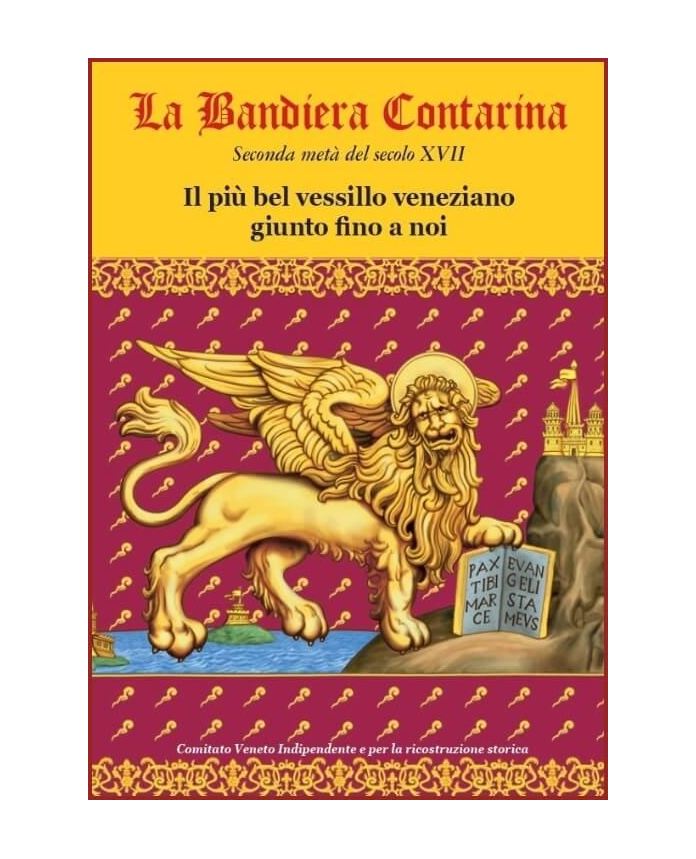
Reproduction of the Contarina Flag, the 17th-century Venetian banner of Doge Domenico II Contarini, restored by the Committee for the Commemoration of the Pasque Veronesi and illustrated by Oliviero Murru.
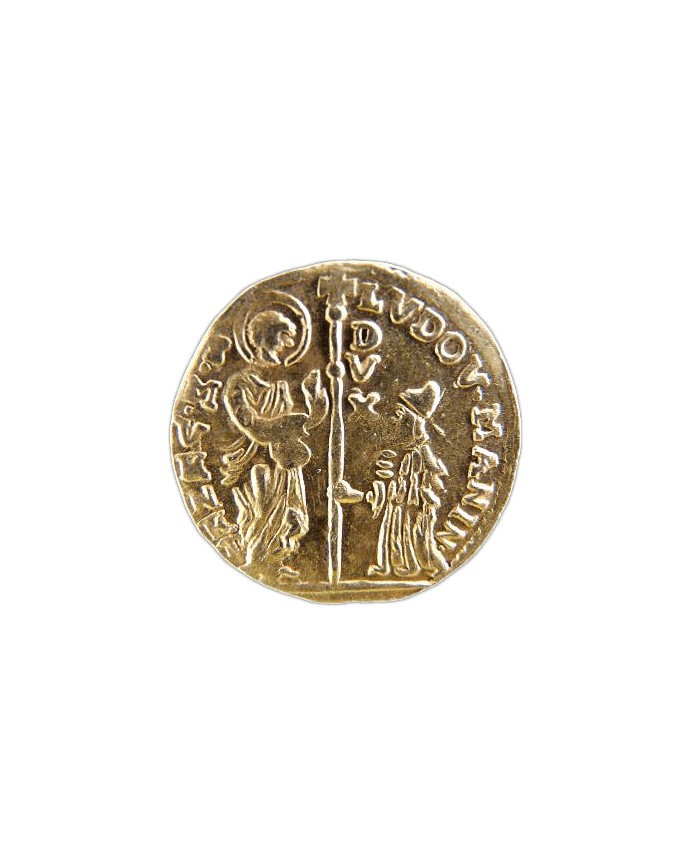
Reproduction of an ancient Venetian coin created by the Committee for the Commemoration of Veronese Easters, depicting Saint Mark and the kneeling Doge, symbol of the Most Serene Republic of Venice.
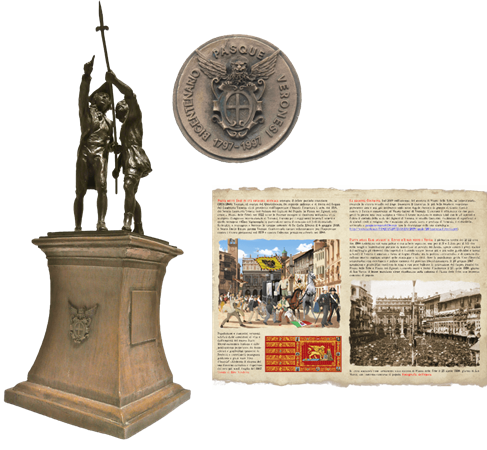
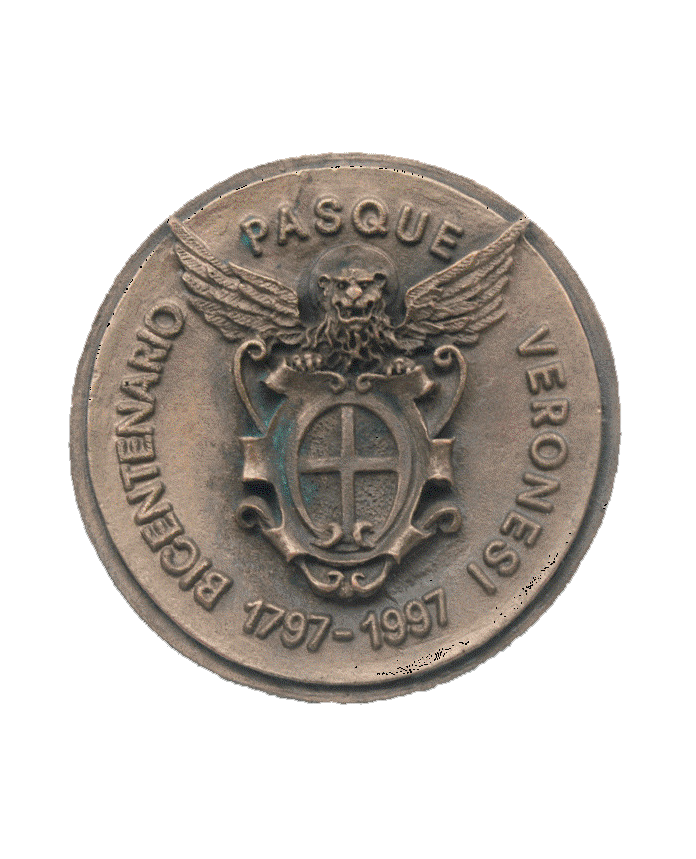
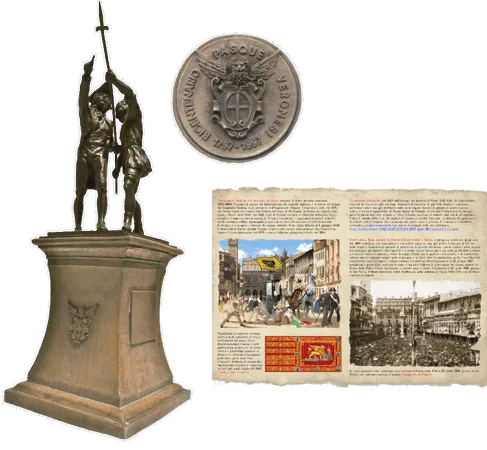
Commemorative medallion for the Bicentenary of the Pasque Veronesi (1797–1997), featuring the winged Lion of Saint Mark and the coat of arms of Verona.